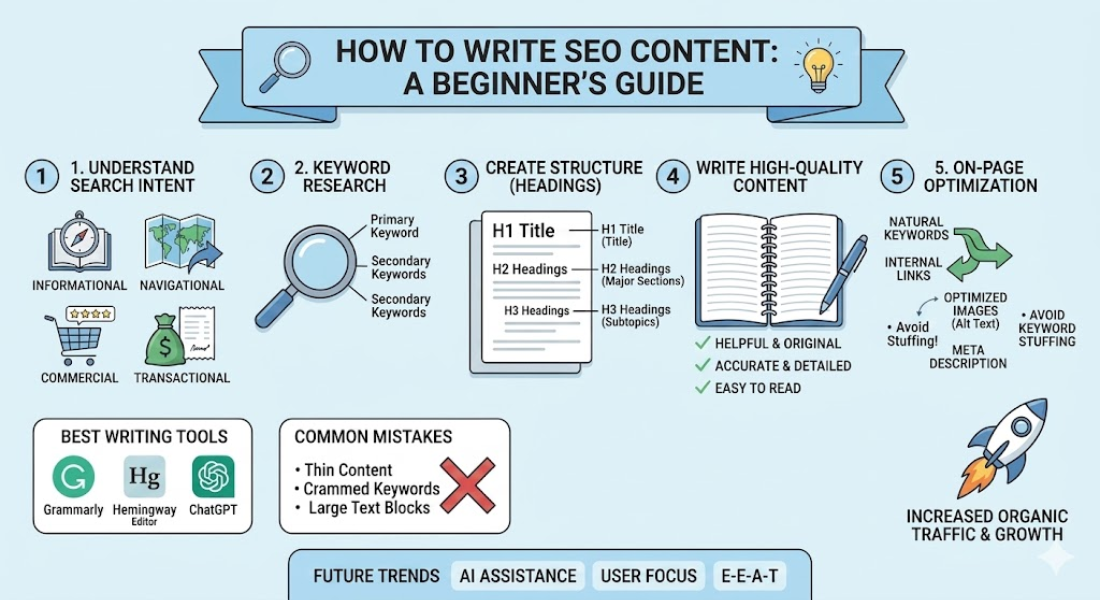
How to Write SEO Content: A Complete Beginner’s Guide
SEO content writing is the process of creating content that is valuable for readers while also being optimized for search engines like Google. The goal is to help your content rank higher in search results, attract organic traffic, and provide useful information that satisfies user intent. Whether you run a blog, business website, or affiliate…
SEO content writing is the process of creating content that is valuable for readers while also being optimized for search engines like Google. The goal is to help your content rank higher in search results, attract organic traffic, and provide useful information that satisfies user intent. Whether you run a blog, business website, or affiliate site, SEO content can help increase visibility and grow your online presence.
In 2026, SEO content writing is more important than ever because search engines focus heavily on content quality, user experience, and search intent. Simply adding keywords is no longer enough. Successful SEO content must answer questions, solve problems, and provide a great reading experience. By learning the right techniques, beginners can create content that ranks well and attracts consistent traffic.
What Is SEO Content?
SEO content is content created specifically to rank in search engines while providing value to readers. It combines high-quality writing with SEO best practices such as keyword optimization, proper headings, internal linking, and content structure.
The purpose of SEO content is to:
- Improve search engine rankings
- Increase organic traffic
- Answer user questions
- Build website authority
- Generate leads and sales
Before learning SEO writing techniques, it’s important to understand the basics of content creation. Read our complete guide on What Is Content Writing? Everything You Need to Know.
Why Is SEO Content Important?
SEO content plays a major role in digital marketing and website growth.
Benefits of SEO Content
Increases Organic Traffic
Well-optimized content helps websites appear in search results and attract visitors.
Builds Trust and Authority
Helpful content establishes expertise and credibility.
Improves User Experience
Organized content is easier for readers to understand.
Supports Business Growth
More traffic often leads to more customers and conversions.
Provides Long-Term Results
SEO content can continue generating traffic for months or years.
Understanding Search Intent
Before writing SEO content, you must understand what users are looking for.
What Is Search Intent?
Search intent refers to the reason behind a user’s search query.
Types of Search Intent
Informational Intent
Users want information.
Example:
- What is SEO?
Navigational Intent
Users want to find a specific website.
Example:
- Facebook login
Commercial Intent
Users are researching products or services.
Example:
- Best SEO tools
Transactional Intent
Users are ready to make a purchase.
Example:
- Buy SEO course online
Keyword Research for SEO Content
Keyword research is the foundation of SEO writing.
Why Keyword Research Matters
Keywords help search engines understand your content and match it to user searches.
How to Find Keywords
Use SEO Tools
Popular tools include:
- Ahrefs
- SEMrush
- Ubersuggest
- Google Keyword Planner
Use Google Suggestions
Google autocomplete can reveal popular searches.
Analyze Competitor Content
Study articles ranking for your target keywords.
Choose the Right Keywords
Primary Keywords
The main keyword you want to rank for.
Example:
- How to write SEO content
Secondary Keywords
Related keywords that support your topic.
Example:
- SEO writing tips
- SEO article writing
Create an SEO-Friendly Title
The title is one of the most important ranking factors.
Tips for Writing SEO Titles
Include the Primary Keyword
Place your keyword naturally in the title.
Make It Engaging
Use words that attract clicks.
Keep It Concise
Titles should usually stay under 60 characters when possible.
Example SEO Title
How to Write SEO Content: A Complete Beginner’s Guide
Write a Strong Introduction
The introduction should immediately tell readers what the article is about.
What to Include
Mention the Main Keyword
Use the primary keyword naturally.
Explain the Topic
Tell readers what they will learn.
Encourage Reading
Create interest and set expectations.
Use Proper Heading Structure
Headings improve readability and SEO.
Types of Headings
H1 Heading
The main title of the article.
H2 Headings
Major sections of the content.
H3 Headings
Subtopics within H2 sections.
Benefits of Headings
Better Organization
Readers can quickly find information.
Improved SEO
Search engines understand content structure.
Enhanced User Experience
Well-structured articles are easier to read.
Write High-Quality Content
Content quality is one of Google’s most important ranking factors.
Characteristics of Quality Content
Helpful
Answer user questions thoroughly.
Original
Avoid copying content from other websites.
Accurate
Provide trustworthy information.
Easy to Read
Use simple language and short paragraphs.
Comprehensive
Cover the topic in detail.
Optimize Keywords Naturally
Keyword optimization helps search engines understand your content.
Best Practices
Use Keywords in Important Places
Include keywords in:
- Title
- Introduction
- Headings
- Conclusion
Avoid Keyword Stuffing
Do not repeat keywords unnaturally.
Use Related Keywords
Include synonyms and related phrases.
Improve Content Readability
Readability affects both users and search rankings.
Tips for Better Readability
Use Short Paragraphs
Large text blocks can overwhelm readers.
Write Simple Sentences
Keep language easy to understand.
Use Bullet Points
Lists improve readability.
Add Headings
Break content into clear sections.
Add Internal Links
Internal links connect related pages within your website.
Benefits of Internal Linking
Improves Navigation
Users can explore more content.
Supports SEO
Helps search engines discover pages.
Increases Time on Site
Visitors stay longer on your website.
Example
When writing about SEO content, you can link to:
- What Is SEO?
- On-Page SEO Guide
- Content Writing Guide
Optimize Images for SEO
Images improve user experience but should also be optimized.
Image SEO Tips
Use Descriptive File Names
Example:
- seo-content-writing-guide.jpg
Add Alt Text
Describe the image clearly.
Compress Images
Reduce file size for faster loading.
Write an Effective Meta Description
A meta description appears in search results below the title.
Tips for Meta Descriptions
Include the Main Keyword
Use the keyword naturally.
Keep It Concise
Aim for 140–160 characters.
Encourage Clicks
Highlight the value of the content.
Include a Strong Conclusion
The conclusion summarizes key points and reinforces the main message.
What to Include
Recap Main Ideas
Summarize the article briefly.
Encourage Action
Suggest the next step for readers.
Reinforce Value
Remind readers why the information matters.
Common SEO Content Writing Mistakes
Avoid these mistakes to improve rankings and user experience.
Keyword Stuffing
Overusing keywords makes content unnatural.
Thin Content
Short, low-value articles often struggle to rank.
Ignoring Search Intent
Content should match what users want.
Poor Formatting
Large text blocks reduce readability.
No Internal Links
Missing opportunities to connect related content.
Best Tools for SEO Content Writing
SEO Tools
Ahrefs
Keyword research and competitor analysis.
SEMrush
Comprehensive SEO insights.
Google Search Console
Monitor website performance.
Writing Tools
Grammarly
Improve grammar and clarity.
Hemingway Editor
Enhance readability.
ChatGPT
Generate ideas and improve writing efficiency.
Future of SEO Content Writing
SEO content writing continues to evolve with search engine updates and AI technologies.
Emerging Trends
User-Focused Content
Quality and usefulness remain top priorities.
AI-Assisted Writing
AI tools support content creation but human editing is still essential.
Voice Search Optimization
Content should answer conversational queries.
E-E-A-T Principles
Experience, Expertise, Authoritativeness, and Trustworthiness continue to influence rankings.
Conclusion
SEO content writing is the art of creating valuable content that satisfies readers while helping search engines understand and rank your pages. By focusing on keyword research, search intent, content quality, readability, internal linking, and optimization techniques, beginners can create articles that attract organic traffic and perform well in search results. Consistent practice and continuous learning are the keys to becoming a successful SEO content writer.
FAQs
What is SEO content writing?
SEO content writing is the process of creating content that ranks in search engines while providing value to readers.
Why is SEO content important?
SEO content helps websites increase organic traffic, improve rankings, and attract potential customers.
How do I find keywords for SEO content?
You can use tools like Ahrefs, SEMrush, Ubersuggest, and Google Keyword Planner.
How many keywords should I use in an article?
Use keywords naturally without forcing them into the content.
What is keyword stuffing?
Keyword stuffing is the excessive use of keywords, which can harm readability and rankings.
How long should SEO content be?
The ideal length depends on the topic, but comprehensive content generally performs better.
Are internal links important for SEO?
Yes, internal links help users navigate your site and improve search engine crawling.
What is search intent?
Search intent is the reason behind a user’s search query.
Can AI write SEO content?
AI can assist with content creation, but human editing is important for quality and accuracy.
Is SEO content writing still important in 2026?
Yes, SEO content remains one of the most effective ways to attract organic traffic and grow a website.