On-Page SEO Guide: Complete Beginner’s Tutorial to Rank Higher on Google
On-page SEO is one of the most important parts of search engine optimization. It focuses on optimizing the content and structure of your website pages so search engines can understand them better. Good on-page SEO helps websites rank higher on Google, increase organic traffic, and improve user experience. In 2026, on-page SEO has become more…
On-page SEO is one of the most important parts of search engine optimization. It focuses on optimizing the content and structure of your website pages so search engines can understand them better. Good on-page SEO helps websites rank higher on Google, increase organic traffic, and improve user experience.
In 2026, on-page SEO has become more important because search engines now focus heavily on content quality, user intent, and website structure. Whether you are a blogger, freelancer, business owner, or digital marketer, learning on-page SEO can help you grow your website and attract more visitors without spending money on ads.
What is On-Page SEO?
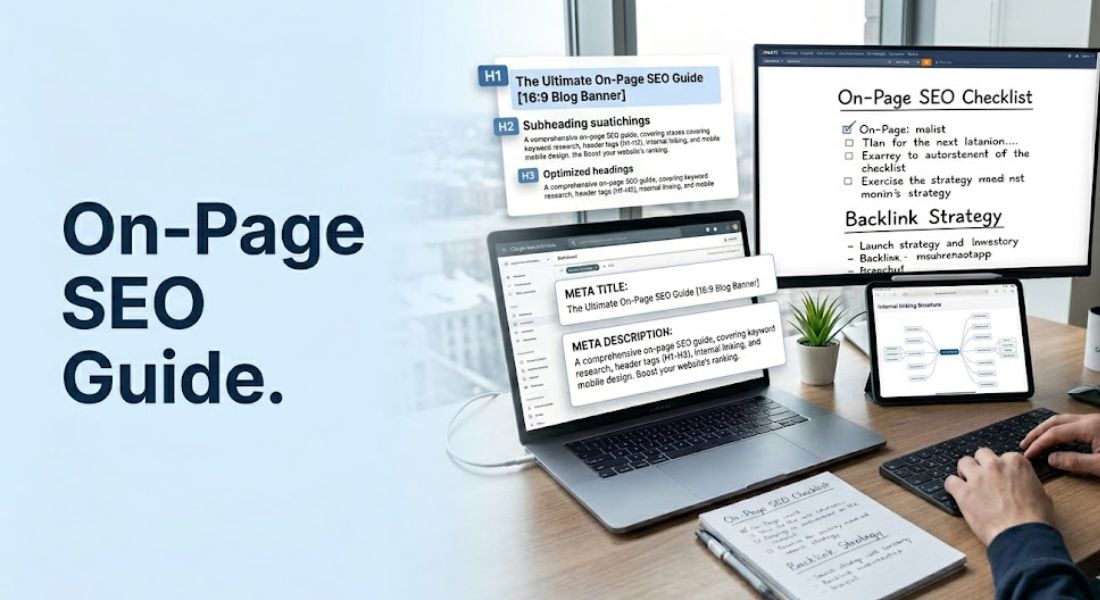
On-page SEO is the process of optimizing individual web pages to improve their rankings in search engine results. It includes optimizing content, keywords, titles, images, headings, internal links, and other page elements.
The main goal of on-page SEO is to help search engines understand your content and provide a better experience for users.
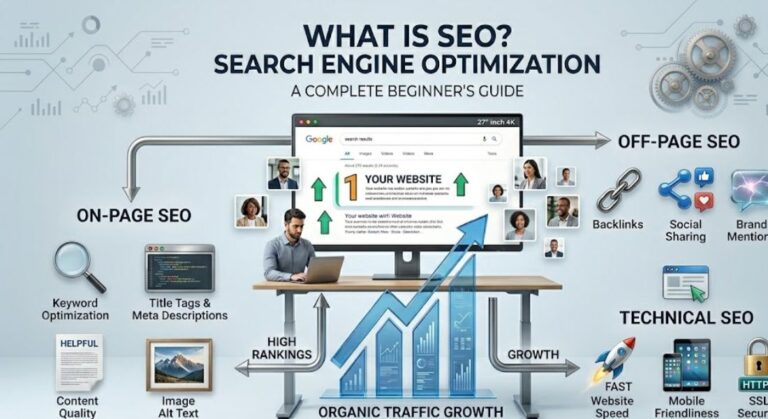
If you are new to SEO, read our complete guide on What is SEO? A Complete Beginner’s Guide to Search Engine Optimization.
Why is On-Page SEO Important?
On-page SEO is important because it directly affects how search engines rank your website.
Benefits of On-Page SEO
Improves Search Rankings
Well-optimized pages rank higher on Google.
Increases Organic Traffic
Higher rankings bring more visitors to your website.
Improves User Experience
Organized content makes websites easier to read and navigate.
Helps Search Engines Understand Content
SEO elements help Google understand page topics.
Increases Click-Through Rate (CTR)
Good titles and descriptions encourage users to click.
Important Elements of On-Page SEO
There are several important factors in on-page SEO that every beginner should understand.
Keyword Research
Keyword research is the foundation of on-page SEO. Keywords are the words people type into search engines.
How to Find Keywords
Use SEO Tools
Tools like Ahrefs, SEMrush, and Ubersuggest help find keywords.
Search on Google
Google suggestions can show popular search terms.
Analyze Competitors
Check which keywords competitor websites use.
Types of Keywords
Short-Tail Keywords
Broad keywords with high competition.
Example:
- SEO guide
Long-Tail Keywords
More specific keywords with lower competition.
Example:
- beginner on-page SEO guide
Title Tag Optimization
The title tag is one of the most important on-page SEO factors.
Tips for Writing SEO Titles
Include Main Keyword
Place the target keyword naturally in the title.
Keep Titles Short
Titles should usually stay under 60 characters.
Make Titles Attractive
Use engaging words to increase clicks.
Meta Description Optimization
Meta descriptions are short summaries shown in search results.
Tips for Meta Descriptions
Add Keywords Naturally
Include the target keyword once.
Keep It Clear
Explain what the page is about.
Use Action Words
Encourage users to click your page.
Heading Structure in SEO
Headings organize content and improve readability.
Types of Headings
H1 Heading
The main title of the page.
H2 Headings
Main sections of the article.
H3 Headings
Subtopics under H2 headings.
Why Headings Matter
- Improve readability
- Help search engines understand content
- Organize information clearly
URL Optimization
SEO-friendly URLs are short, clean, and descriptive.
Good URL Example
- yourwebsite.com/on-page-seo-guide
Bad URL Example
- yourwebsite.com/page?id=12345
URL Optimization Tips
Use Keywords
Add the main keyword naturally.
Keep URLs Short
Avoid unnecessary words and numbers.
Use Hyphens
Separate words with hyphens instead of underscores.
Content Optimization
Content is one of the biggest ranking factors in SEO.
Tips for SEO-Friendly Content
Write Original Content
Avoid copying from other websites.
Use Keywords Naturally
Do not overuse keywords.
Write for Users First
Focus on helping readers.
Add Headings and Lists
Improve readability and structure.
Update Content Regularly
Fresh content performs better in search results.
Internal Linking
Internal linking means linking one page of your website to another related page.
Benefits of Internal Linking
Helps Search Engines Crawl Pages
Google can discover pages more easily.
Improves User Navigation
Visitors can explore related content.
Increases Time on Site
Users stay longer on your website.
Image Optimization
Images improve user experience, but they should also be optimized for SEO.
Tips for Image SEO
Compress Images
Reduce file size to improve speed.
Use Alt Text
Describe images for search engines.
Rename Image Files
Use descriptive file names instead of random numbers.
Mobile Optimization
Most users now browse websites on mobile devices.
Why Mobile SEO Matters
Better User Experience
Mobile-friendly websites are easier to use.
Higher Rankings
Google prioritizes mobile-friendly websites.
Faster Loading
Optimized mobile sites perform better.
Website Speed Optimization
Website speed is an important ranking factor.
Ways to Improve Speed
Use Fast Hosting
Choose reliable web hosting services.
Compress Images
Large images slow down websites.
Use Caching Plugins
Caching improves loading time.
Reduce Unnecessary Plugins
Too many plugins can slow websites.
User Experience and SEO
Search engines prefer websites that provide a good user experience.
Important UX Factors
Easy Navigation
Menus and pages should be simple to use.
Readable Fonts
Text should be easy to read.
Clean Design
Avoid cluttered layouts.
Fast Loading Pages
Users leave slow websites quickly.
Common On-Page SEO Mistakes
Keyword Stuffing
Using too many keywords unnaturally.
Duplicate Content
Copying content from other websites.
Missing Meta Tags
Ignoring titles and descriptions.
Poor Heading Structure
Using headings incorrectly.
Slow Website Speed
Slow websites can hurt rankings.
Best Tools for On-Page SEO
Popular SEO Tools
Yoast SEO
Helps optimize WordPress websites.
Rank Math
Popular SEO plugin for beginners.
Google Search Console
Tracks website performance on Google.
Ahrefs
Useful for keyword and SEO analysis.
SEMrush
Comprehensive SEO and marketing tool.
Future of On-Page SEO in 2026
On-page SEO is evolving with AI, voice search, and user-focused algorithms. Search engines now prioritize high-quality content, user experience, and helpful information more than ever before.
Websites that focus on:
- Helpful content
- Mobile optimization
- Fast loading speed
- Good structure
- User satisfaction
will continue to rank better in search engines.
Conclusion
On-page SEO is an essential part of digital marketing and website optimization. It helps improve search engine rankings, increase website traffic, and provide a better experience for users. By learning keyword research, title optimization, content writing, internal linking, and image optimization, beginners can build strong SEO foundations and grow their websites successfully in 2026.
FAQs
1. What is on-page SEO?
On-page SEO is the process of optimizing website pages to improve search engine rankings.
2. Why is on-page SEO important?
It helps websites rank higher, increase traffic, and improve user experience.
3. What is the difference between on-page and off-page SEO?
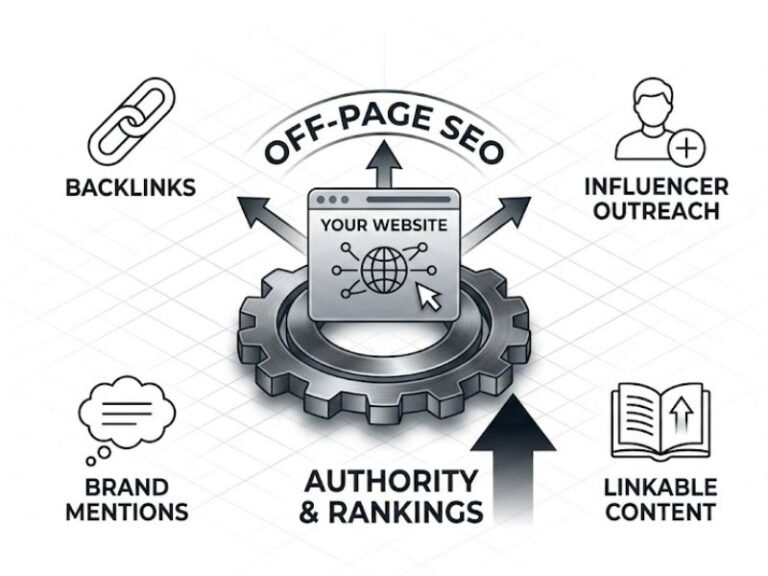
On-page SEO focuses on website content and structure, while off-page SEO focuses on backlinks and external promotion.
4. What are keywords in on-page SEO?
Keywords are search terms people type into search engines.
5. How many keywords should I use in an article?
Use keywords naturally without overstuffing the content.
6. Does website speed affect SEO?
Yes, faster websites usually rank better on Google.
7. Why are headings important in SEO?
Headings organize content and help search engines understand page structure.
8. What is internal linking?
Internal linking connects pages within the same website.
9. Is mobile optimization important for SEO?
Yes, Google prioritizes mobile-friendly websites.
10. Which plugin is best for on-page SEO?
Yoast SEO and Rank Math are popular SEO plugins for WordPress websites.